Tuesday, February 28, 2006

Hawking reminiscences

It's been bitingly cold and sunny today, and it snowed. Unusual snow for the fens, too! Dry grains like tiny polystyrene balls, pouring off scattered stormclouds in great, blowsy plumes. It's bitterly cold, and nothing seems further away than those long, leisurely days out hawking with my merlin last autumn. Ah, but hawking reminiscences are so good. You remember everything except the things that went wrong and the stress. Perfection! For non-falconers out there, merlins are tiny falcons, like little distilled peregrines. In Britain, their traditional quarry is the skylark. I have a special license to be able to fly larks, as falconers have done for centuries. And I love them just as much as merlins. This might be appallingly counter-intuitive to the non-hunter, but it's true in so many different ways. The season for lark-hawking is short—about six weeks in the autumn—and we hardly catch any larks as it is. And pretty much every day of those six weeks, I'm out with the merlin, getting muddy and grassy and slightly wild in the head. And then the season's over, and I become a library-haunter and bored again. I wrote these scraps right at the end of the season. It's strange reading them with snow in the air.

It’s getting to the end of the merlin season now. Argh. I think the merlin season has three stages: First: early days. Hot days, where you wait for late evening before wandering out across new, dusty stubble and are prone to being soaked in sudden thunderstorms. Then come calm, beautiful early-autumn days. Still, glacial sun, high flights and contemplative sunsets. Just when you forget that the weather had ever been different, it changes again: the end of September comes, the winds get high, the remaining stubble shrinks, and where it remains the larks rise up in the gusts like leaves and the lark-hawker gets morose. I suppose there’s some life-lesson offered from how short the season is, but I can’t see it. It just sucks.

Yesterday she decided she was a sparrowhawk and punched into a twelve-foot thick blackthorn hedge after her quarry. Leaves flew. You could hear sticks breaking from a good fifty paces away. I wandered up and listened to the hedgeline. Then crouched down and parted the branches at the very base of the bush ... ouch ... sloes dropping around me. There she was, looking VERY cross. As if she was standing on tiptoes, about to shout, ‘where is it? Where is it?!’. She was convinced this bird was gettable. That it was just here. I left it here. So she peered about, looking under branches and craning her neck around roots and leaf-litter, getting crosser and crosser in the semi-darkness. It’s not here any more, merlin I said, and reached in with a garnished fist. She jumped to it and I carefully extracted her, inch by inch, from the hedge. If the lark escapes, the lark escapes.

 So difficult for a merlin to make headway into this wind, which sends the larks up like chaff. Lots of birds though. Clouds of thirty or forty linnets bouncing about. Three or four corn buntings. The big flock of feral pigeons feeding on the far slope. Three days ago, she lost a lark in the air and then decided to give the pigeons hell. I’ve never seen anything like it with a merlin. Daft bird. She peeled off, flipped over and singled one out, and the variegated flock rose and scattered like dunlin. Whaaat? Trust me to have the only merlin in Britain that pretends to be a peregrine.

Today, she's in a spacious aviary up in Yorkshire with a male merlin. I'm hoping they'll breed. And I was thinking about my favourite falconry memory from last year. Strangely, it wasn't a flight. It was the time we were sitting in a clover field in Barton one late evening. I was feeding the merlin her evening meal at the end of an evening's hawking. Everything smelt of clover. And though the sun had just gone down, the air was still warm, and full of swifts and bats and insects, and I watched my merlin turn her head on one side to stare up at a heron creaking over on its way to roost. It turned its head, too, and looked at us, and then just carried on back home.

Monday, February 27, 2006

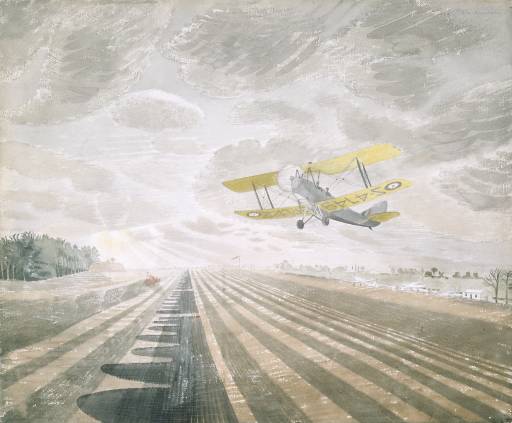
Four paintings


One by an artist who spent his life wishing he could fly. One by another who died piloting a glider. And two by one who failed to return from an air-sea rescue operation off Iceland in 1942.

Wednesday, February 22, 2006

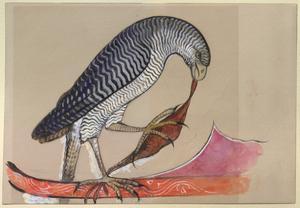
The goshawk sketch


My friend Dr Ralley sent me this last night. It's an extract from a letter written in late November 1472, from John Paston to his brother, also called John.
Ryght worchepfull syr, I recomand me to yow, thankyng yow most hertly of your dylygence and cost whyche ye had in gettyng of the hawk whyche ye sent me, for well I wot your labore and trowbyll in that mater was as myche as thow she had ben the best of the world. But so God help me, as ferforthe as the most connyng estragers that euer I spak wyth can jmagyn, she shall neuer serue but to ley eggys, for she is bothe a mwer de haye and also she hathe ben so brooseid wyth cariage of fowle that she is as good as lame in boothe hyr leggys, as euery man may se at jee; wherfor all syche folk as haue seen hyr auyse me to cast hyr in-to some wood wher as I wyll haue hyr to eyer. But I wyll do ther-in as ye wyll, whedyr ye wyll I send hyr yow a-yen or cast hyr in Thorp wood and a tarsell wyth hyr, for I woot wher on js. But now I dar no more put yow to the cost of an hawke; but for Godys sak, and ther be eny tersell or good chep goshawk that myght be gotyn, that the berer herof may haue hyr to bryng me. And I ensuer yow be my trowthe ye shall haue Dollys and Browne bonde to paye yow at Kandyllmas the pryse of the hawke. Now, and ye haue as many ladyse as ye wer wont to haue, I reqwere yow for hyr sake that ye best loue of theym alle, onys trowbyll yowr-syllf for me in thys mater, and be owght of my clamor.
"For God's sake, are there any tiercels or good cheap goshawks you could get for me? I'll pay you later..."

Falconers don't change much, do they?


Today's favourite bird sentence is...


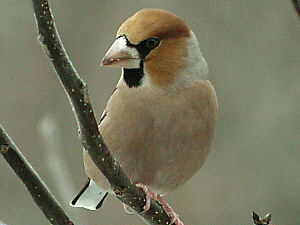
"Hawfinches feeding nonchalantly in the shell-wracked Reichswald"

(The Hawfinch, Guy Mountfort, 1957)

Even Gerard Manley Hopkins would have been proud of writing that.

Tuesday, February 21, 2006

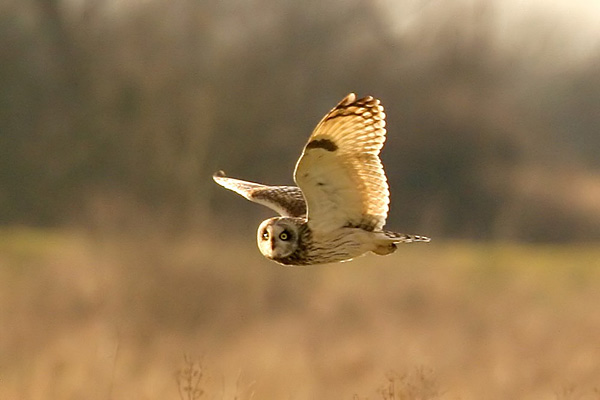
SEO


A cracking photo by Garth Peacock of a Short Eared Owl quartering the fen at Wicken. I don't like owls, much, I admit. I've had to fly them in falconry demonstrations, and they're no good at at all. They'll sit there, and you wave a large hunk of yummy meat right in front of their eyes and whistle and call and call and they ignore you for minutes at a time. And then—as if they've suddenly woken up—they'll fly to you and eat it. But there's no knowing when, and there's no wherefore. They're hard to train, because unlike hawks, they seem to have no crops; the food goes straight to their tummies. Thus, even one small reward of food means they're no longer hungry and they'll just sit there and inwardly digest. And I know that this is because they're perfectly evolved to hunt small mammals, by sound, in the dark, not fly to a motionless glove for a scrap of beef. Despite knowing this, I must still say that owls do give the impression—a strong impression—of being the stupidest animals alive.

But wild owls are different. You can watch barn owls and short eared owls hunting in evening sunlight at Wicken, and they are absolutely magnificent hunters. I pity the questing voles.

The best scientific discovery account ever

Charles Elton, the Oxford ecologist I was researching last week, is famous for discovering all sorts of things about animal populations. Particularly, the spectacular boom-and-bust population cycles of arctic lemmings. Now, usually, when you read about Elton's discovery, you get something like this:
The lemming population cycle, with peaks 1,000 times as high as its valleys, was the first discovered, explains Peter Turchin of the University of Connecticut in Storrs. Biologist Charles S. Elton pointed it out in 1924, elaborating on a notion that struck him while browsing in a Norwegian nature book. He couldn't read the words, but the pattern in the numbers jumped out.
But I'm happy—nay, delighted—to report that the full story of Elton's scientific discovery is much, much more interesting. And much, much funnier.

Let's set the scene. Elton had been on an Oxford University expedition to Spitsbergen. To Bear Island, more specifically, where he and his colleagues (including his tutor, Julian Huxley) had been conducting ecological and geological surveys. On the way back, Elton spent his last few pounds on a book on Norwegian mammals by a chap called Collett. And here we have, straight from the archives, in Elton's own words, the real story of how he came by his flash of insight.
In 1923 I was doing 12 hours of research a day in the old Zoology department. When Collett’s book began to open the window on “cycles”, I was a bit slow at first to see the significance of the thing. Here was a series of migration years for lemmings in different parts of Norway. I made maps of them and put them in a semi-circle on the floor of my research cubicle, and stared at them off and on for about four hours, feeling that they had some further message. Then, as I was sitting on the seat of a lavatory near my room, brooding on the meaning of the charts, it came “in a flash” that they represented the overflow of periodically increasing populations – that is, they were an index of a cycle in populations. This is by far the biggest break-through of ideas in ecology that I have ever made.
What a winner! Lavatorial humour in the history of science is a rare and precious thing. By the way, Elton goes on to send himself up delightfully, saying:
Incidentally, just note that whereas Archimedes got an idea from something overflowing, I got an idea about overflowing by sitting in a similar sort of place.
Carry on, Elton.

Sunday, February 19, 2006

Oxford II: Ice

It turned out a clear, sunny, cold morning. Surprisingly, because I'd been awake most of the night listening to the rain, with a nasty stomach ache. Meh. Anyway, in true pluvialis fashion, the cure for anything, stomach ache included, is COFFEE. So I beetled over to the nearest cafe, squinting in the sun, with the wet pavements underfoot giving off a chill so intense you could almost believe they’d been running with meltwater.
Signs on the café wall:

coffee. it’s an EYE opener. BRAIN activator, energy giver, IDEA stimulator, be REVIVED.

drink COFFEE. Hang OUT IN coffee bars. Be PART OF THE CROWD. stand out FROM the CROWD. OBSERVE AND BE OBSERVED. or just IGNORE everyone and ENJOY your cup.

what ARE YOU thinking about?

Boy, that second sign freaked me out. The third one didn't, because I'm
perpetually ready to rebuff an interrogation. My hackles rise. "As if I'd tell you, sign!" That's what I'm thinking. But the second is just plain unsettling. Are those all direct orders? Suggestions? What am I supposed to do? What am I supposed to want to do? (Maybe the creeps are behind this).

(Note: Weird Orwellian signs on café walls are a bit of a personal bugbear. In Tescos supermarket, Edinburgh, c. 2003, pluvialis was transfixed for a good minute by a giant purple photograph of a woman drinking a cup of coffee with the words "Coffee Time" printed next to her in three foot capitals. What? Why? Wherefore? It's not like it's an advertisement—you can't see it unless you're sitting down in the cafe already drinking coffee. Is it for reassurance? "Yes thank goodness I chose to come and have a cup of coffee, because that poster on the wall shows me it was clearly the right thing to do"?)

I get over my pathetic ex-literature-student-who-took-too-much-acid semiology panic, eventually, and drag my ass to the Bodleian to check out these mss. The Bodleian is famously, geologically slow at getting books to its readers. While our University Library resembles a soviet-era powerstation, it is super-efficient at book collection. Twenty minutes, thirty minutes: blam! There's your book, with a little paper ticket in it, ready for you to collect. At the Bodleian, it seems, you order your book and you wait for it. What I didn't know was how long. The readers guide I was given suggested anything from three hours to three days. Wow. Three days! And furthermore, if you wish to consult manuscripts, like I did, you're supposed to write to them in advance. Write!

So knowing nothing of this, pluvialis skipped blithely and ignorantly down to the end of Broad Street with a sheaf of papers assembled to convince the Admissions Office that she was a bona fide researcher (which I am, come to think of it).


And as I find the gate to take me into the — hand on my heart, holy moly, by far the spookiest place I've ever been. The bodleian quad. Picture doesn't really communicate how walking into it was like walking into a tank of very old, very cold water, like the stuff that pours out from under a retreating glacier.

Fortuitously, despite all my ignorance, the Bodleian was on high-efficiency mode, and the mss appeared in an hour and a half. I spent the rest of the day going through box after box of papers, diaries; photographs of the young Charles Elton on Bear Island, Spitsbergen, in the 1920s; letters, booklets, postcards, and so on. I particularly liked an enthusiastic schoolboy letter in a rather wobbly cursive hand, from Charles (on holiday in the Lake District) to Geoffrey, from 1913. It lists all the fauna and flora he's seen, and ends (spelling as in original):
I am not sending primroses because I suppose you can get them at Cambridge. Leonard and I walked to Hawkshead today and went to the reading room, and afterwards got a hard compo. ball for catching practice. Write a card soon if you do want primroses and I shall send some. The ravens have been mobbed by the perigrines. The sparrows are always driven away from the bird-table, by throwing woollen balls at the window. There are heaps of lambs here now. Please write, if you have time. I am staying till the end of the week. C.S.E.

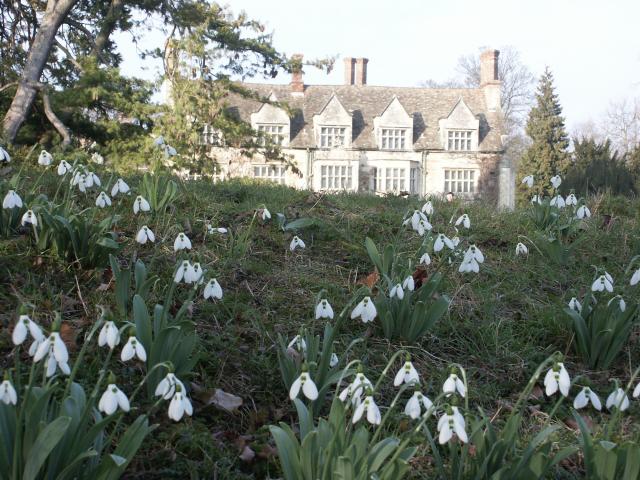
I'm happy to report that you can get primroses here in Cambridge. And oxlips, too, in local woods. Neither are out yet. The snowdrops are, though.

Saturday, February 18, 2006

Oxford I: Kites

I first read Philip Pullman’s trilogy His Dark Materials lounging on a sofa in a friend’s house in Scotland. Three books in three days: quite the reading habits of a nineteenth-century convalescent! Out of the window, a distant, still-snowy Ben Wyvis, white grass, black oak, ash, and a lot of sky. And kites. Red Kites, that is. The progeny of a release programme on the Black Isle, these were buoyant, glamorous raptors with long, kinked wings, delicately tacking their forked tails against the complicated breezes that blew off the hill behind the house.
Have you read these books? They’re marvellous. Philip Pullman trounces CS Lewis on every level (which is just as well considering how rude he's been about him) and a better question would be: Pullman or Tolkien? Northern Lights, the first book, begins with a scruffy, feral, fierce small girl called Lyra Belacqua, who is a ward of an Oxford College. But Lyra lives is an alternate universe, While Northern Lights' College world is in part familiar—it's still a world of retiring rooms, gowns, fine wines, factions, friendships, papers, presumptions—much is different. In Lyra’s Oxford, human souls assume the form of corporeal animal companions (her own is called Pantalaimon); electric lights are anbaric lights, there are armies of soldier-bears, in the north. Witches and tartars; and science natural philosophy under the aegis of Church-as-State. Like the other books in the series, it unflinchingly interrogates all our loves: of north and home and heart and work and—not to give anything away—God.

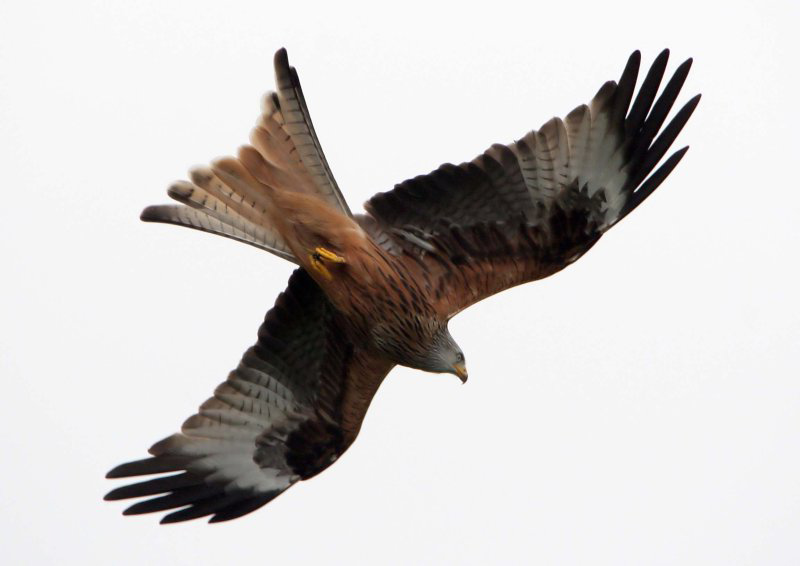
I saw a red kite on the way to Oxford. From a train window. It was poised on a turn, heading toward me, just about to stall in the way kites do — they are masters of slow, searching flight — and as it hung there, a paper-cut sharp sillhouette of tail and pinion stamped black onto the sky, it looked as heraldic and symbolic as a key or a shield or a telescope. And I remembered the kites in Scotland, and thought, oddly, this might be an interesting trip. Then a half-remembered line from the second book of Pullman’s trilogy, The Subtle Knife, came to mind. Will, a boy from our Oxford, meets Lyra. She is astonished by him, but realises that she is not lacking a soul, a daemon, but simply a corporeal one.

How much easier if his dæmon had been visible! She wondered what its form might be, and whether it was fixed yet. Whatever its form was, it would express a nature that was savage, and courteous, and unhappy.
That last line was what I remembered. Later, I walked the streets of Oxford as night was falling. And I remembered it again. Just as Pullman’s Oxford is recognisably Oxford, only not in this universe, it became plain that Oxford was a recognisable Cambridge, only not in this universe! I don’t mean the obvious differences. Of course Oxford is different: different buildings, different roads, different colleges from Cambridge. I’m not talking about comparing College fascias. The sort of difference I felt was something very close and invisible, like the feeling you get when someone looks over your shoulder when you’re reading. The kind of uncanny, inchoate feeling when you cross from a ‘safe’ neighbourhood into an unsafe one in a big city. Nothing is obviously changed, only you know you’re somewhere quite different. And after a while walking around that evening, the uncanny differences started to show through the obvious differences. And they were sometimes fine, like engraver’s lines, and sometimes bulky and brute as icebergs.

That evening I see bus-stop advertisements warning people not to buy guns. I see slaughtered deer slung up in butcher’s shops, headless and truncated, with rough pelts and waxy fat showing through. Over the entrances to college staircases, ghostly chalk tallies of rowing victories. I see a man struggling to breathe through an oxygen mask, the whites of his eyes showing through a crowd of paramedics. I balance my coat on a needle-dumps in a public loo. The tiny college Fellows’ room I stay in has a window opening onto to the leafless branches of a thorn tree. The staircase leading up to it, and both sets of doors, are painted glossy, bright, and battered carmine.

So that evening I decided that the whole city is wonderfully savage and courteous, and unhappy. No wonder Cambridge students call Oxford 'The Dark Side". Cambridge is not like this place, I thought. Cambridge is serene, wintry, dispassionate. It would unhesitatingly leave you to die if you were drowning, but it wouldn't hit you over the head with an axe. Oxford, after a moment's consideration of civility, would. Oxford is anglo-saxon and fierce. That's what I was thinking, bizarrely, as I walked about that evening.

So, with pretentious pithiness, I finally solved my puzzle. Cambridge is cold. Oxford has blood underneath. I understood, when I walked back into the dark quad at Jesus College Oxford, why T E Lawrence was here, and not Coleridge.

Monday, February 13, 2006

Question

I am off to Oxford, city of dreaming spires, on Wednesday. Sigh. No, I'm looking forward to it. I am going to spend three days sitting in the Bodleian Library working through 100-odd boxes of the personal papers of Charles Elton, ecologist. This might sound as interesting as watching dust settle, but to pluvialis, it's, well, brilliant! I've got a guest room at my College's sister college (each Cambridge college has a 'twin' in Oxford). It's a beautiful College, right in the middle of Oxford, and here is my question.

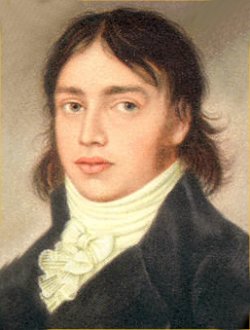
Most famous past student of my College, Cambridge: Samuel Taylor Coleridge.

Most famous past student of their College, Oxford: Lawrence of Arabia.


Quandary.

Which is cooler?

Sunday, February 12, 2006

Mindfulness

Paul Rabinow (his homepage, with a picture of him) and his mates at Berkeley have set up a rather fine collaborative enterprise called the Laboratory for the Anthropology of the Contemporary.

Note: Most academics who have pictures of themselves in that pose on their homepages tend to be slightly insecure about their intellect. That's why they show themselves thinking. But I have heard Professor Rabinow give a talk: it was exceptionally nuanced, sophisticated and interesting. To put it in a nutshell, Paul Rabinow is a very, very clever man.

LAC is all very state-of-the-art and super-duper; it has a highly pertinent programme on Biosecurity, for example. See? Cutting edge academicians, and all that. Who said we sat in ivory towers? Anyway: despite my usual raised eyebrows at academic jargonese, which proliferates here, LAC seems a Good Thing, particularly since it's making its working papers and documents available to all.

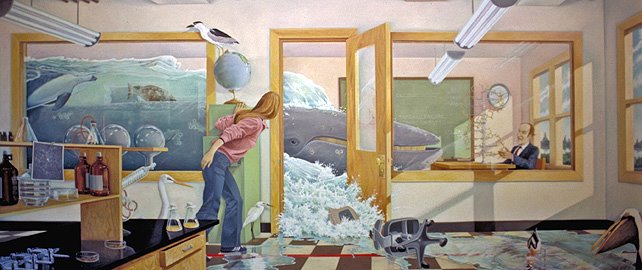
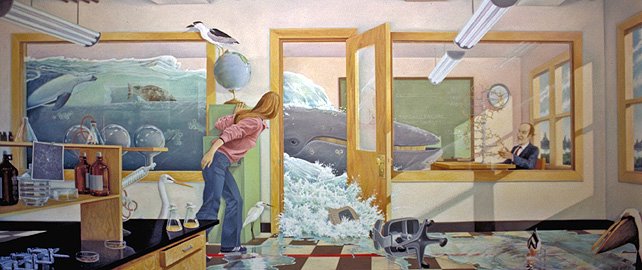
But of course, this post is all about me, not Professor R. Because I'm taking the liberty of reproducing, here, the fantastic painting on LAC's home page. Isn't it just great? I guess I like it in part because it's a weirdly accurate representation of my subconscious mind, these days.You can see a bigger version here.


Through a glass, darkly

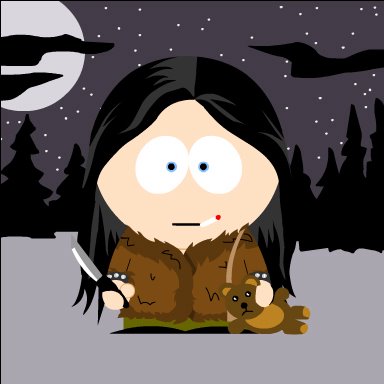
Apparently, if I was a character in South Park, I'd look like this:


Get thee to this page here and make your very own South Park likeness. I hope yours is less scary.

Friday, February 10, 2006

Pay for your scientific credentials!

I thought poetry was the least economically viable form of writing. But hello? It's not true. Now, I don't have that much knowledge of the production process for peer-reviewed science journals. But I do know quite a bit about peer-reviewed humanities production. And thus the publication policy of Avian Conservation and Ecology absolutely creeps me out.

It starts off so well! Manuscript submissions are blind refereed by experts. Peer review! A serious journal! So far so good. But then the hook: successful authors have to pay 750 Canadian dollars for their paper to be published. Online, that is.

Good grief, that's almost four hundred pounds. Does this kind of thing go on all the time? Tell me. And, peer review notwithstanding, how is this not vanity publishing?

Thursday, February 09, 2006

Yuk

I just got this announcement of an arts event. I've heard of art having visceral immediacy, but this is taking it way too far, surely:
ENDO ECTO
Phillip Warnell

10 February 2006, 3 - 8 pm
Nash Room, ICA, The Mall, London SW1, UK

The fascinating capsule endoscopy procedure is a completely new technology, for the first time enabling the photographing of the GI passage in its entirety.

In a two-part performative demonstration, artist Phillip Warnell will undergo a live capsule endoscopy medical procedure, integrating projected visual material from his project, Host, which makes use of raw material gathered in this way. In part one, and following a period of preparatory fasting, Warnell will ingest an untethered pill sized camera, which will embark on a fantastic voyage through the nine-metre gastro-intestinal tract.

In part two, following a period of waiting whilst the capsule progresses via the bodies peristaltic, muscular contractions, the camera's radio transmissions will be downloaded to a drive and viewed/interpreted by gastroenterologist Simon Anderson through a unique software interface.

During this informative journey into the realm of the transparent body will be an assemblage of international speakers, including cultural theorists Bettyann Kevles and Rick Allsopp, writer/curator Lisa Le Feuvre, and researcher Anne-Sophie Cussatlegras, who will be giving an extraordinary demonstration of living bioluminescence.

Sunday, February 05, 2006

My Postillion Has Been Struck By Lightning


Last night, my dear friend Mukund leant me one of the prizes of his personal library. Mukund can speak about thirty languages, did a PhD in astrophysics, and is not only a genius but also one of the nicest people in the world. His book is called Hindustani for the Tourist. Second Impression, 1996. Leafing through, you realise almost immediately, and with a slightly giddy horror, that it was originally published much, much earlier. For example: here is a list of things one can bring in, duty-free:
  • Two cameras
  • One pair of binoculars
  • One portable wireless receiving act
  • One portable record player with ten records
  • One portable sound recording apparatus
  • One portable musical instrument
  • One portable typewriter
  • One tent and camping gear
  • Sporting fireams
  • One canoe
  • One pair of skis and two tennis racquets
I'm surprised pith helmet and foxhounds aren't included. Of course, you discover the word 'please' is featured nowhere. And all the orders in Hindustani are in the familiar, 'tu' form. It's an addictive, hilarious, excrutiating, and pretty depressing glimpse into a British-Indian universe of olde-tyme imperialism.

Here are some snippets of the kind of useful phrases a tourist "might need". (I'm leaving out the translations, of course)

At your hotel, rest house or dak bungalow
Can I dine in shorts at lunch?
Can I bring ladies to my room?

Servants you may need and their engagement
Can you write?
Are you honest?
Are you clean in person?
Do you bathe daily?
What pay do you expect?
It is too much
I do not think you will suit me

Directions to servants
Light the lamps
Open my bag
Boil two eggs medium
This egg is not cooked properly
Butter the bread
This is filthy
Carry out my orders
Has this water been boiled?
Are you certain about it?
You are very lazy
I won't stand for this
Don't bring your friends here
Tell them to get out
You are a rascal
I don't like your manner
Now you can go

Sport, Hunting and Fishing
I am a sportsman
I am interested in bird-watching.
I want to shoot small game
I want to shoot big game
Can we shoot green pigeons?
I would like to bag a jungle cock
I suppose we need permits
Where can we get permits
I want a light rod
We shall require beaters
I want to get a tiger
There are many flies here
These ants are a nuisance
Bring my gun
Face the barrel the other way
Load my gun
Do not make any noise
I would like to play golf

The Shoemaker
Can you make a pair of shoes for me?
This leather is poor quality
I want some evening shoes
Can you make golf shoes?
I would like them in suede
I would prefer sambhar skin
Can I get crocodile?

Saturday, February 04, 2006

Harvey

This is for real. Look at those feet. Golly. What would a Harris hawk do?

Friday, February 03, 2006

Welcome, tourists!

Some recent keywords that have brought the unsuspecting hordes to fretmarks include:
Coffee sloganeer
pro patria mori
Bio-Spheres and Boswelox®
harry potter and the babblers pebble
Shiny Parka Bondage
That last one would have been my favourite, were it not for MSN. Which brought one surfer to fretmarks who'd been searching for:
Photos and beautiful pictures of international landscape and important land marks.
Oh dear. I hope he or she wasn't disappointed. Maybe this will help:

Interview! Interview! Interview!

Media whoredom, at last! This morning I was interviewed on BBC radio. Terrified. Absolutely terrified. Pluvialis was frantically reading her book on the London train, trying to remember what she'd written in it. Sat in a cafe for an hour mainlining black coffee and chain-smoking camels, reading the book even more frantically. And then, stuffing the book and the cigarettes back in my bag and wandering down the grey pavement to Portland Place, sit of Broadcasting House. Which is a huge edifice of smooth portland stone. Built in 1932. The statue by Eric Gill over the front entrance shows Prospero and a naked Ariel. Apparently there were complaints about the size of Ariel's penis. And so the Director General, John Reith, ordered Gill to, erm, amend it. There's a random fact for you etc.

Anyway. In I went, through the glass doors, into a foyer full of security uniforms, screens, blue comfy lounge seats. I was handed a BBC security visitor's badge. Awesome! I spent ten minutes sitting in the foyer, trying to be calm, watching BBC News 24 on the foyer's giant, silent, plasma screens. Sad reports of the sinking of a Red Sea passenger ferry had real-time subtitling spooling across the bottom of the screen. Typed by a stressed person wearing a pair of headphones, perhaps, sweat running down his or her forehead. Or, more likely, some terribly sophisticated voice recognition software. Because there were some fabulous mistakes. "Rescue hell kofters" instead of rescue helicopters, for example. This was all a bit awful, to be honest. Because the story was hellishly grim, involving mass loss of life, and there I was, wired on adrenalin, laughing out loud at the stupid spelling mistakes. Dreadful behaviour.
Talking of spelling mistakes, a friend of mine once sent me photocopied excerpts. He said they were taken from the Official Secrets Act. I guess sending them—and indeed, reading them—was technically illegal. But it was very funny. Because the bits he sent were full of terrible grammatical errors and spelling mistakes. So bad, that one wonders whether they might render the Act ineffectual. I mean, if someone says, I promise to keep a "sercret", would you trust them? It's strange. You would have thought the Government had a copy-editor somewhere with sufficient security clearance?
Anyway. The interview? It went fine. Surprisingly so. Where did all the adrenalin go? No idea. I just sat there, in a tiny room, walled in by audio kit, staring at the little, unlit "on air" bulb set in a wooden fitting on the baize table. Someone had engraved a little wobbly criss-cross pattern into the wood. Just like the sort of thing kids engrave on their school desks when they're very, very bored. Wow, I thought. That must have been a boring interview...poor sod.

So I wittered on about falcons for a few minutes, and then before I knew what was happening the producer and presenter were beaming, shaking my hand and saying "thanks for coming". Strange. I'm not going to listen to the programme when it's aired though. The idea of hearing my own voice coming out of my own radio is just too mind-numbingly weird. How do celebrities cope, dammit?