Sunday, September 17, 2006

Thursday, September 14, 2006

Albatross!


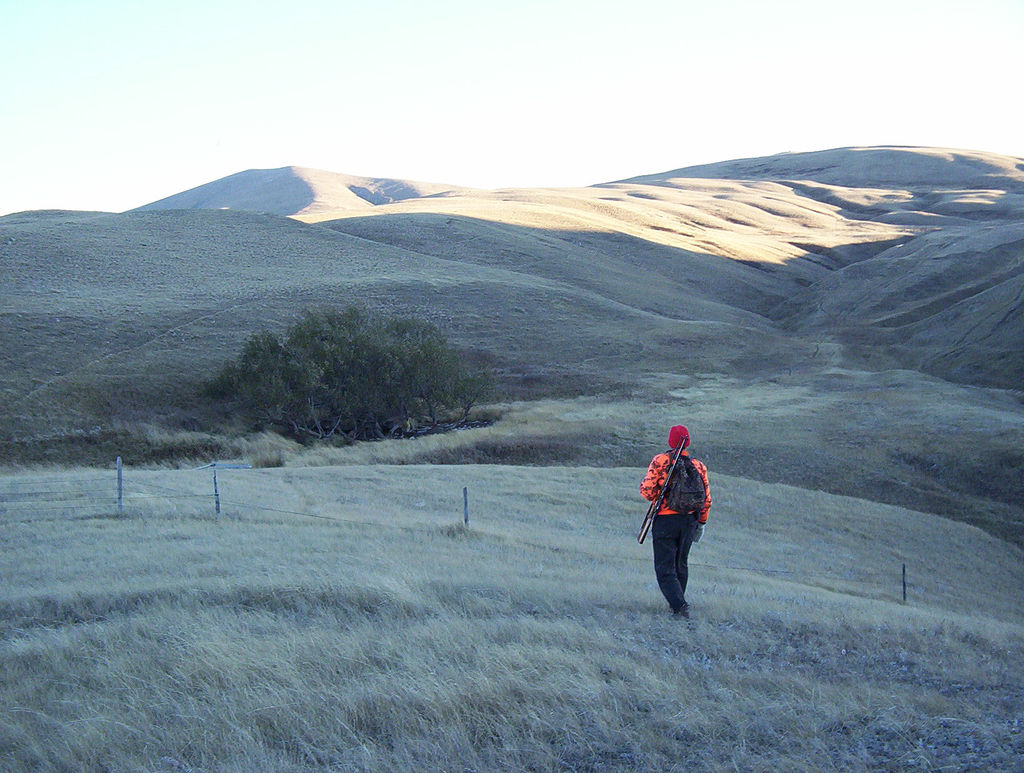
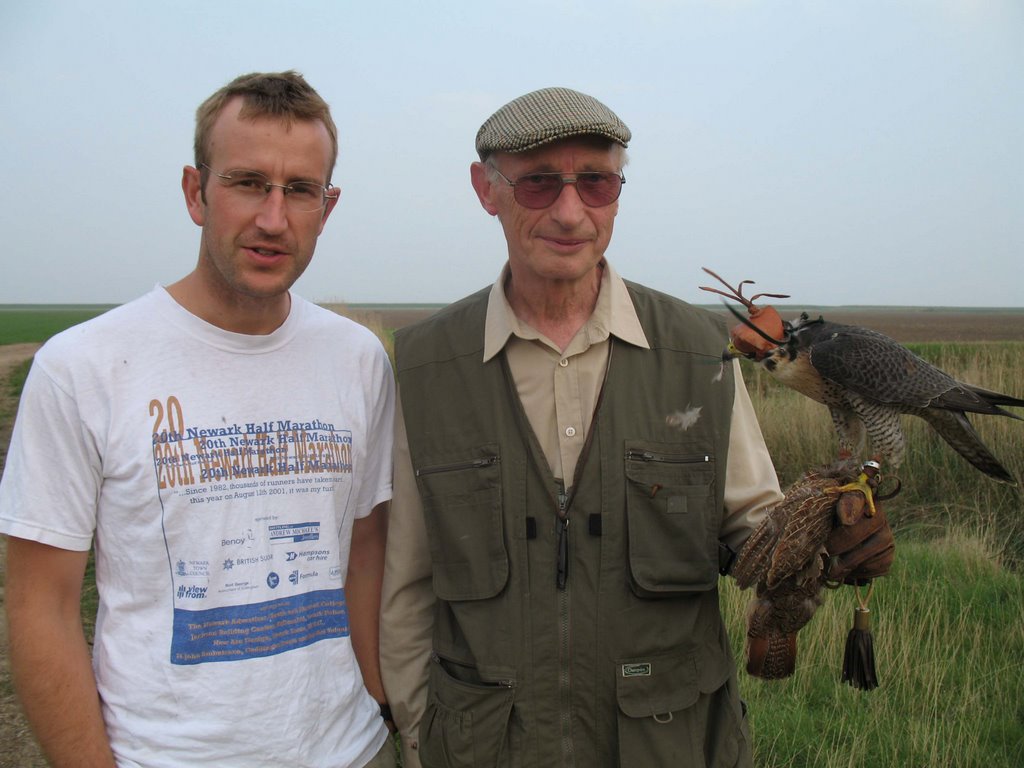
(whoever this is, I envy him greatly....)

Tuesday, September 12, 2006

Pluvialis, grumping


Really grumping. This time, about the poor quality of most cultural history and sociology of hunting. It's such an extraordinarily rich subject! Studying the history and culture of hunting is an opportunity to explore important questions about the ways cultures interact with the environment, with technology, with history, and with each other. Why is no-one exploring encounters like this? The cultural history of hunting is an astonishingly empty field. The numbers of hunting papers and books are small, and by gun, finding a jewel among them is rare indeed.

I got very excited about a blog a while ago. It was on the philosophy of hunting, and the author was a professional philosopher and amateur hunter! But it slowly mired itself in that tarpit of evangelical sociobiology that says: neolithic man is the be-all and end-all of what it means to be human. Soon the blog stopped talking about hunting, and started talking about how hunting makes you fitter and more toned and buff than cross-training because — wait for it — it’s what the human physiological machine evolved to do. Cue posts and posts and posts on the blogger’s own fitness training. Snoooooore. My loss, perhaps, but I have no interest in the hunting field as an outdoors gymnasium, and even less in using hunting as an apology for hard-wired versions of the human psyche. Complain, complain, complain....

Pah. And I get just as hacked off by the opposite end of the spectrum: cultural theorists who take 6,000 words to argue that all hunting is a cultural phenomenon. Of course it is. Using this as a counterargument to the ‘hardwired hunting human’ hypothesis is worse than boring; it’s lazy.

But the most depressing thing about scholarship on hunting? A few years ago I went to a conference at University College London. A fantastic place; it even has the stuffed corpse of Jeremy Bentham in a glass box in the hall. The conference was on the anthropology of zoology — and it drove me crazy with frustration. One chap’s talk on wildlife tracking consisted mainly of him showing slides of birds he’d tagged. I found this so irritating that I spent his entire paper copying out all the rather creative graffitti that years of UCL students had hacked into the lecture-hall desk in front of me.

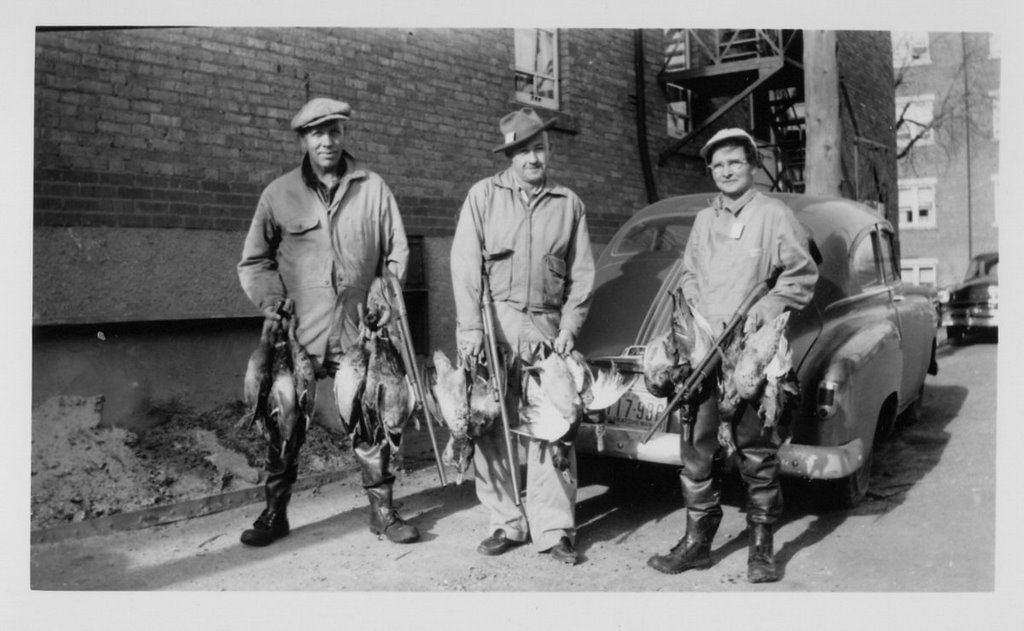
Oh, hark at me. I sound so sour and horrible. But one of the papers I saw at this conference made the whole trip worthwhile. It was by a couple of cultural geographers at Nottingham University, David Matless and Charles Watkins. It was on the geographies of wildfowling and otterhunting in postwar Britain. It was superb. Thoughtful, nuanced, sophisticated, ambitious and occasionally very funny. If you have access to a university network, you might be able to read a printed version here or here.

What did the audience think? Well, the selfsame audience that had gone ‘ooooh’ when bird-banding man flashed a photo of a cuddly owl on the screen rebelled. When Matless and Watkins screened a photograph — which made a crucial, illustrative point — of a Master of Otter Hounds holding an otter pelt up above the hounds, a stir of disquiet ran through the audience. Someone even booed (quietly; it was, after all, an academic audience). Their censure seemed to be directed at the speakers.

I was amazed. If you work in the field of criminal psychology, people don't automatically assume you're a serial killer. If you, like many of my acquaintances, work on the history of atrocities in Nazi Germany, people don't assume you're doing it for crypto-fascist reasons. But if you work on hunting? It seems that unless your talk has explicitly moral ends, unless you tie your flag to the mast immediately by assuring your audience that you find hunting morally unacceptable, you're going to be on the sharp end of moral and academic censure.

This is crazy.

But I have recently read two excellent papers on hunting, and I’m so glad about it, I’m going to rave about them. The first is by Andrea Smalley, and it’s in a journal called Gender and History (Vol.17 No.1 April 2005, pp. 183–209, for those of you who like references). It’s winningly titled: I just like to Kill Things: Women, Men and the Gender of Sport Hunting in the United States, 1940-1973.

It argues—among many other things—that post-WWII antipathy towards women's hunting was a new phenomenon. Before the war, right through the late nineteenth and early twentieth centuries, women's hunting was considered not only entirely acceptable but as a restraining and respectable influence on male hunting.

But, it suggests, World War II forged a new, aggressively masculine construction of sport hunting in which the male-male social bonds forged in service played a crucial part. "Demobilisation and the loss of intense male relationships threatened to demasculinise men”, it argues, prompting a“post-war revival of 'virile' activities, such as violent sports" and "sport hunting, as one of these 'virile' and violent sports, offered men the chance to recapture at least some sense of their profound battlefield experiences”. Hunting became not merely recreational, but an “essential source of gender identification for men" who “constructed a masculinity based on what seemed to be universal male experiences on the battlefield and on the hunting field”. Thus women could “no longer be legitimate hunters in this intensely masculinised sphere”.


Interesting, huh? I think so. But it doesn't tell the whole story, not by a long shot. Hunting isn't all about hanging out with your service buddies, just about killing animals. The notion of protecting, identifying, and above all, interacting with wildlife and wilderness — all these things which connect centrally with questions of nature, culture and personal identity—these are as crucial in hunting as any of its more visceral and “virile” aspects, and it’s a lack of understanding of the subtle psychological and geographical interactions of hunters with their environment that academicians tend to miss.

But the next paper escapes all censure. It is the best paper I’ve ever read on hunting cultures. It’s also a powerful political statement. It's by Kenneth Iain at the University of Toronto. And it's called Global Hunting Grounds: Power, Scale, and Ecology in the Negotiation of Conservation. It considers a fairly new development in international conservation; one in which NGOs rely upon market-oriented interventions, such as trophy hunting, to achieve biodiversity protection and local development, but in so doing deprive local communities of their hunting traditions. Imperialism revisited. It’s a dense and well-argued piece. Anyone able to pick it up on an electronic resource such as JSTOR (Matt?) should read it.

Here is the abstract:

Increasingly, large international conservation organisations have come to rely upon market-oriented interventions, such as sport trophy hunting, to achieve multiple goals of biodiversity proteection and 'development'. Such initiatives apply an understanding of 'nature' — defined through an emerging discourse of global ecology — to incorporate local ecologies within the material organisational sphere of capital and transnational institutions, generating new forms of governmentality at scales inaccessible to traditional means of discipline such as legislation and enforcement. In this paper, I historicize debates over 'nature' in a region of northern Pakistan, and demonstrate how local ecologies are becoming subject to transnational institutional agents through strategies similar to those used by colonial administrators to gain ecological control over their 'dominions'. This contemporary reworking of a colonialist ethic of conservation relies rhetorically on a discourse of global ecology, and on ideological representations of a resident population as incapable environmental managers, to assert and implement an allegedly scientific and ethically superior force better able to respond to assumed degradation. In undertaking such disciplinary projects, international conservation organiseations rely on, and produce, a representation of ecological space as 'global' to facilitate the attainment of translocal political-ecological goals.

I said it was dense!

Perhaps too much choleric food has made my blood so het up. Here's a plea to all scholars working on hunting, myself included. Define your terms! Is it possible to use “hunting” as a category of analysis at all? How can one talk of subsistence seal-hunting in the same breath as foxhunting; driven pheasant shooting in the same breath as falconry? There are as many different forms of hunting as there are forms of marriage. And while certain forms of both I find rather distasteful, some might be what we are here for. Tally ho!

Monday, September 11, 2006

Sunday, September 10, 2006

By the way

I can't comment on anyone else's blogs, now. Not unless they too have 'migrated' to Beta. They're very apologetic about this at Blogger Beta. Not that this makes it any better. I'm sorry, and I hope they fix it soon.

Wishlisting

If we're going to be talking about the globe and the disposition of the stars, perhaps I should bring in Jonathan Cainer, the astrologist whose daily star signs became required reading for a whole cadre of PhD students in my department. It started quietly enough. Two of us were having coffee in the tearoom. My friend was complaining about having to go to the Bodleian. He openly lamented the sheer number of books and early modern manuscripts he had to consult in the next two weeks. For some reason, messing about on the web, we started reading horoscopes — and of course, being modern scientific souls, we set no store on them as anything other than a rather novel procrastination gambit.

His horoscope said, I recall, something like
do you ever despair that you'll never possess all the knowledge in the world, find the books you need, read all the things you need in order to understand what it's all about?
He blanched. I checked mine.
You feel as if you're engaged upon a long project, like a PhD thesis, that might never come to fruition
That was enough to send this PhD student back down to the library with panic in her heart.

Cainer has recently brought out a book on Cosmic Ordering. Cosmic Ordering has to be the funniest piece of late capitalist New Age thought ever. Check this out. Indebted to Heidi, can I just say that this is a load of ass-hattery. Of course it works: get someone to work out exactly what it is they want, feel positive that they'll get it, and you're in a good position to make it happen. I don't think the idea of the cosmos as a giant Argos store really cuts it.

But who knows?

With this in mind, here is my Cosmic Ordering List. In the spirit of late-capitalistic New Age consumerism, I'm going to concentrate on pointless material goods.

1. The House
Please deliver me a house. It doesn't have to have a sporting estate attached, honestly. Something like this would be very nice:


2. The Boots
Please deliver me a pair of Dubarry dark brown Galway boots.


3. The bag
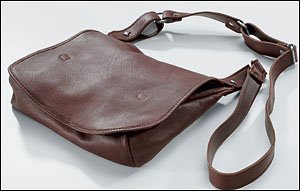
Please deliver me a Manufactum elk bag


I can't do this! It's terrible! My first three choices are those of a county-set snob. Erk!
Also, it seems my entitlement complex is way too small: I can't think of anything material other than boots and bags. What about a first folio, or a herd of White Park cattle, a or a cast of cassini peregrines, or a painting by Peter Lanyon?

Tsk. I'm just not thinking big enough. Or perhaps I've surprised myself by being far happier with what I have right now than I thought I was before I did this stupid exercise. Hmm. Dear Cosmic Ordering, please bring me better-constructed sentences.

I used to work with a guy called Simon. Simon wore overalls because he had a rotten job; if there was jetwashing to be done, cages to clean, ostriches to move, dung to heap, Simon did it. He also did the lottery every week. I asked him once what he'd buy, if he won. He frowned for a bit, and then, shyly, said "I'd buy a really new Ford Fiesta".

Meeep!

I really, really hope he won, and that he's driving it right now.

Autumn fever

There’s a vault of blue sky and a tinny chill to the sunshine today. Migration time! If I went to Newmarket Heath this afternoon, lay on the wiry turf and stared straight up, I'd see all sorts of birds flying much higher and with more purpose than usual: gulls, harriers, buzzards, perhaps an osprey or a peregrine.
I didn't understood this migration business until a few years ago. Not to say I didn’t know a lot about migratory flyways, proximate and ultimate causes, timings, ringing recoveries, and quite a lot about the history of those most romantic of ornithological sites, coastal bird observatories, where tank-topped 1950s ornithologists smoked pipes while they extricated warblers from mist-nets and ringed their tiny legs with numbered bands.

No, I ‘got’ migration in 1998. Isn't that a ridiculous sentence? Bear with me. I was visiting my friend Erin. He lives in Maine, in a house by the river, and right on the eastern coastal flyway. It was September. It wasn't hawkwatching that did it, although seeing Coopers and Sharpshinned hawks slip past mountain ridges is rather cool. Nor was it the little falls of warblers, bunched, damp and grey, sitting in the shrubbery at dawn.

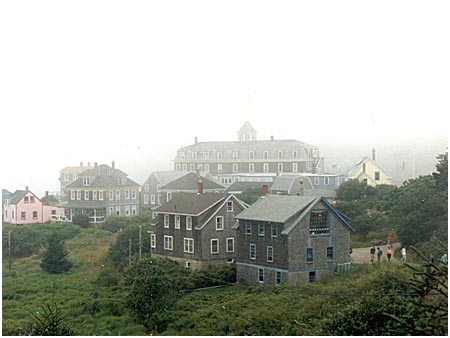
I 'got' migration on a trip to Monhegan Island. Seven miles out to sea, Monhegan is famous for — oh, lots of things. Runes that record Viking outposts. An artistic outpost, too, home of the Wyeth family — no-one does better gulls than Jamie Wyeth, by the way —

Monhegan is rocky and lichen-y (lichenaceous?) and mossy and wet as a beach pebble even in the sun. It was fog-bound when we arrived, and the morning after. Erin and I walked up the hill behind the town as the mist cleared, and as it did, the sky filled with merlins. Carnival time! Merlins everywhere! And scores of passerines on the ground, crouching motionless behind stalks and stones. Fair enough: we found several tufts of feathers attached to torn scraps of skin stuck to rocks: remnants of fresh merlin kills. Warblers for breakfast.


Down by the sea, we walked right up to little groups of Least Sandpipers: ridiculously tiny, pebble-sized travellers resting here on their way south from the Arctic. They watched us incuriously down their long noses, as unconcerned about our presence three feet away as were the wet fronds of wrack they stood upon.

It was that morning, I think, that I felt for the first time (felt in my bones) the strange, seasonal lines of force pulling animals this way and that. A strong, inchoate need to move, but in concert with very precise feelings about how and where, a keen eye for weather and wind and fellow-feeling.

Of course, migration works both ways; yes, northern hemisphere birds migrate south in autumn. But it's south here, for some. One of my favourite birds — you see, I've finally got to the point — is a winter visitor to Britain. It's a thrush. A subarctic one.

Two species of thrushes visit Britain in winter. The smaller of the two is the redwing, a jaguar-like, shy, and slightly deranged thrush with devilish eyestripes and a burst of dried-blood rouge on each side. Redwings skulk in hedges and disappear with a thin seeeeep alarm call, and they slink about in the periphery of your vision when they first arrive.

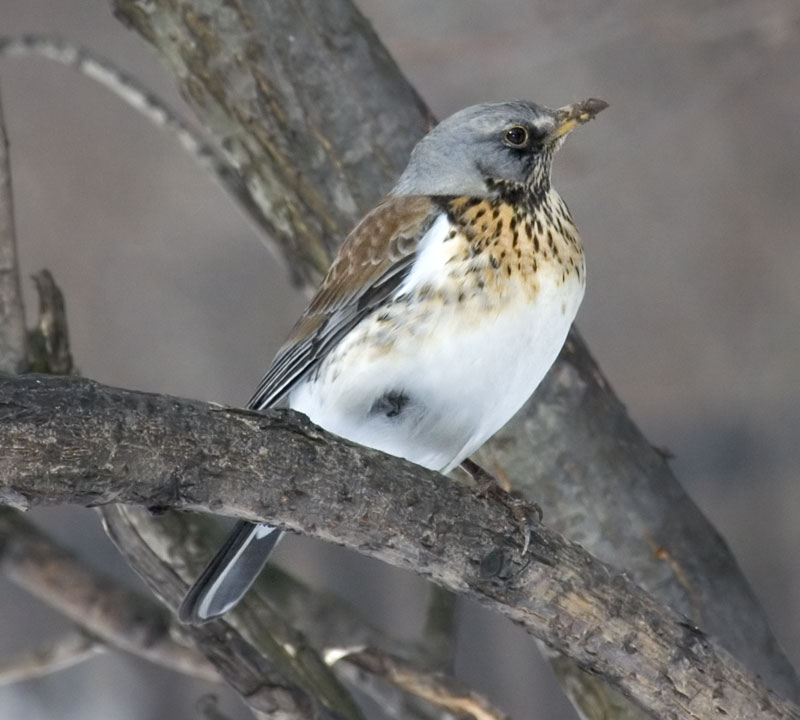
But my favourite arctic thrushes are fieldfares. They're big, bold, patterned and arch. Alternatively, they're grey, fierce and wolfish.They are splendid. You have to use the plural, when talking of fieldfares. They arrive in rattling flocks like gusts of spray or hail. They are noisy when they fly, and their chak-chak-chak call is like someone launching a handful of pebbles on an iced-over pond surface. Chack chack chack: echoey, dopplery, cold.


A very few pairs nest in the north of Scotland, right now. Most hail from Norway and Sweden and further north-east, and spend the winter being nomads, moving from place to place in response to snow and berry crops. In Britain they bounce about on playing fields, pasture and football pitches and eviscerate rotting apples in orchards with predatory relish. I love them also because they carry the arctic around them like coats. Different birds carry around place with them in different ways. They carry history, too.

There's much more to say on this, of course, of course. Here is a poem by R.F Langley that has fieldfares in it. I should probably not republish it here without permission, but perhaps Roger wouldn’t mind. He is the finest nature poet in Britain.

The Barber's Beard

By Wednesday afternoon the wind has dropped
and there can be a shakedown. When I tap
the stems, black seeds jump off onto the snow
and fix themselves, so Jack says, according
to the disposition of the stars. It's
Alexander's dust, he says. It smells of
myrrh It's Macedonian parsley and
also, he says, the surface of fresh snow
is more like fur. Each seed is caught in this
soft stillness as a small orb in its place,
tilting its face, and very tenderly
presented to the air. Now we expect
some music in the distance, from a house
which once was there.
Yes, Crustyfoot, we guess,
has made it to Piepowder Fair, and so
we know that Scipio will soon be back
from Africa. He'll blow in from the north
on Scandinavian gales. He'll be disguised
as a big thrush, dancing and flapping in
the cold bathroom and shouting out, "I'm home!
I'm home!" Home in the roofless ruin up
the track, where Jack's map says "Old Hall" and all
the drifts are deep and new. So, in the glow,
thorn by thorn, another diagram of
the strategy of last year's brambles has
been drawn.
I stop and stand where paths cross on
a Wednesday afternoon Where else am I?
Somewhere there is a story being told
I recognise Jack's voice that's quietly
telling it, as he describes how a man
is standing underneath a tree. How he
can see the standing of the man. He says
he feels his coat is comfortable and that
his shoes are doing well. The comfort of
his coat and what is watertight. He sees
that the ash is carrying its bunches
of ripe keys. The tree's carrying, and the
carrying of the keys
The amazement
of Scipio in his shaving mirror
Show me his shivering. Show me his quick
smile that flutters out about the edges,
and spreads as wide as the blue backs of what
must be a flock of fieldfares, suddenly
flashing round the lime-green branches of bright
winter hedges, and he....who?..we...at once
smell soap, and unexpectedly catch sight
of an awkward little grin attempting
to take flight, avoiding the circle of
reflected light. The only witness's
white face, frozen as he realises
that it's up to him. The him it's up to,
disabled by his role in last night's dream
and terrified that I am Hannibal.
Dustyfoot arrested in a blaze of
alibis, blinking like an idiot
and hinting he's a friend of Jupiter.
Are you all right? Is he all right? Here is
his list of all the dead elms in the ditch.
If you need to check the details you will
find the same old worn-out wormholes under
any scab of bark, and nothing about
the arrangements to tell you which is which
Well then. Good morning Jack. Don't slip away.
Just for a moment there I thought you'd gone
while I was shaving you. Please look on me
as if I were your barber, concealing
my irritation that you're late today
by gossiping along in this sing-song,
hiding the gist of what I have to say
in brisker chatter.
Suppose the felties
were to pick out every berry, laughing
mysteriously,"Tchak, tchak!" That Jack himself
were the piper, and his son stole sweets. Which
silly little theft, for all the shouting,
turned out to be, not just a merry lark,
but princely, attended in the dark by
cherubim. Believe it. That the bodies
of the elephants rolled over on the
bitter snow. That schedules barked. That a freak
tide exposed the northern wall as they stormed
across the lagoon at Cartagena
Then it would seem that all the answers could
be ticked As if the nouns, detected in
the depths, began to glimmer deeper yet
beneath the things, so all the secret eggs
grew wings and even Hercules was sure
his debts would settle out of court at last
Then keys could hang fast, waiting for a touch
in March from sleepy moonlight Scuttling verbs
could trap elusive opportunities
among unlikely roots
But just as it
occurred to Jack that he might count the flock,
bird after bird displayed an ash-gray rump.
They've turned away and opened up.
They are
about to go.
This is the moment when,
flummoxed to know what else is left to do,
Jack and the poet and the pronouns shrug,
take a breath each, and melt into the blue.
Saturday, September 09, 2006

Stellar cartography

The last couple of weeks have been less than fun. Housemate Xtin is moving into a new house, and I shall miss her dreadfully. The academic year is coming in like a fast tide, my little red Cambridge Diary is filling up with tetchily scrawled Things To Do, and I've cancelled my grouse-hawking trip for lack of time and funds. And over all these things has hovered an ill-defined but strong sense of anxiety. I've been feeling quite unhoused and hollow inside; a little blind, like I don't know where home has gone.

This afternoon we went out blackberrying. Xtin brought her basket woven of osiers and red dogwood, R brought his two small children, and their small pink blackberry bucket, and we filled basket and bucket with berries to their brims. It was a perfect afternoon, precise as a line drawing, right on the blade-edge between summer and autumn. Stubble-dust, chalk and cirrus. Small flocks of collared doves clapping down to feed in the field margins; sloes in the hedges; parties of linnets bouncing down the hedgeline.

All the time we picked our berries small flocks of gulls passed by, very high; and house martins, lower down. There was an almost tangible sense of things shifting and moving and being pulled across the globe, a feeling like spring fever in reverse. It was a migratory day, and all the birds knew it. Time to move.

Cut: back a few weeks, to my second night in Tashkent, when I had a humdinger of an orientalist dream. I was out on the high steppe in the company of people and horses and dogs and eagles; we were travelling at night, on our way somewhere, under a vast sky of stars. Oh yes, so cliched.

But I got to see those stars. Not with my caricatured dream companions, but in a car, in real life, very late at night, driving from Khojand in the Fergana Valley up to the border between Tajikistan and Uzbekistan, on desert roads. Tricky roads. Roads that threatened to tear the sump from the car; roads littered with lumps of broken concrete and rippled with impacted ridges of sand. One of my colleagues was quite seriously ill, and at some points it seemed less than likely we'd ever reach the border. My old friend Mark, biologist and ex-Paratroop regiment officer, would have described the situation as 'a little untidy', I think, with his typically graceful talent for understatement.

But there were stars, of course. It was frustrating to be in the car. So when we slowed to a crawl in crossing a particularly bad stretch of ground, I rolled down the backseat window and stuck my head out into the night. There were bats! Looping over the roof, snapping up insects attracted by the car.

And I leaned so my face was staring straight up at the night sky. It was magnificent. It was dusty and milky and velvety; somehow exactly like a lens, and also something hard and glossy and black, like the polished granite of a fire surround. I couldn't fix on the scales. Sometimes the constellations seemed close enough that I could press my face into them. And sometimes the distance leaned in and dried my soul — very scary — like a finger pointing at an atom. Out of the corner of my eye I couldn't tell whether each occasional streak of light was a meteor or a desert moth uplit from the headlights. Both were frequent. And the Milky Way! Oh, lord. It's a poorly defined stripe in the polluted skies of southern Britain. But there, a vast river. Look:

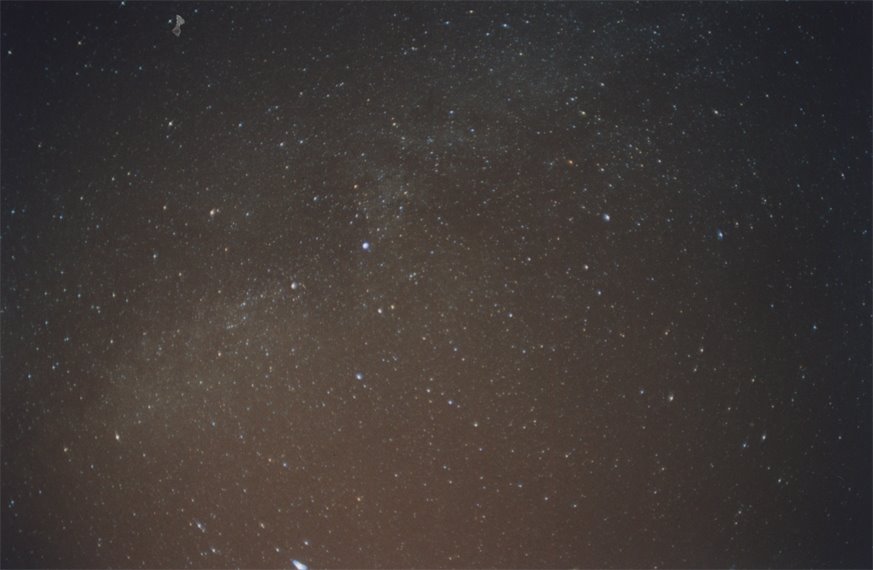
That's what it looks like from here. What I saw from the car was more like this:


There are
many names for the milky way. Right across Asia it's called The Road of Birds. Or the Way of Birds. Migratory birds: cranes, falcons, geese. Here's a quote from an illuminating article on Estonian folk astronomy (you can download it here.

Heavenly Way – Bird Way that migrant birds travel in spring and autumn. The birds are led by a white bird, resembling a swan, with the head of a pretty maiden. All birds of prey fear it. Hawks and eagles hide in the clouds from it. In the summer it lives on top of a boulder in the North, watches the midnight sun and is fed sweet northern berries by big birds. My grandmother’s third husband, Juri Nomberg, was an old seaman and he saw how this white bird led a big herd of birds over the great sea towards land. It flew so low that its young maiden’s face could be seen and a big tired hawk flew away from the ship’s mast in fright.
Splendid stuff. And this evening, feeling still a little hollow and unhoused, I sat on the back step of the house and smoked a cigarette. Picking blackberries with friends had softened whatever it was that was bothering me, but not entirely. Sitting there against the wall, I heard rooks cawing, very, very faintly. Up in the clear dusk sky was a long, straggling flock of about a hundred rooks. And in the soft cawing was the occasional high, piping call that spoke eloquently of their destination: they were flying to roost. I watched them for a long time as they passed slowly overhead.
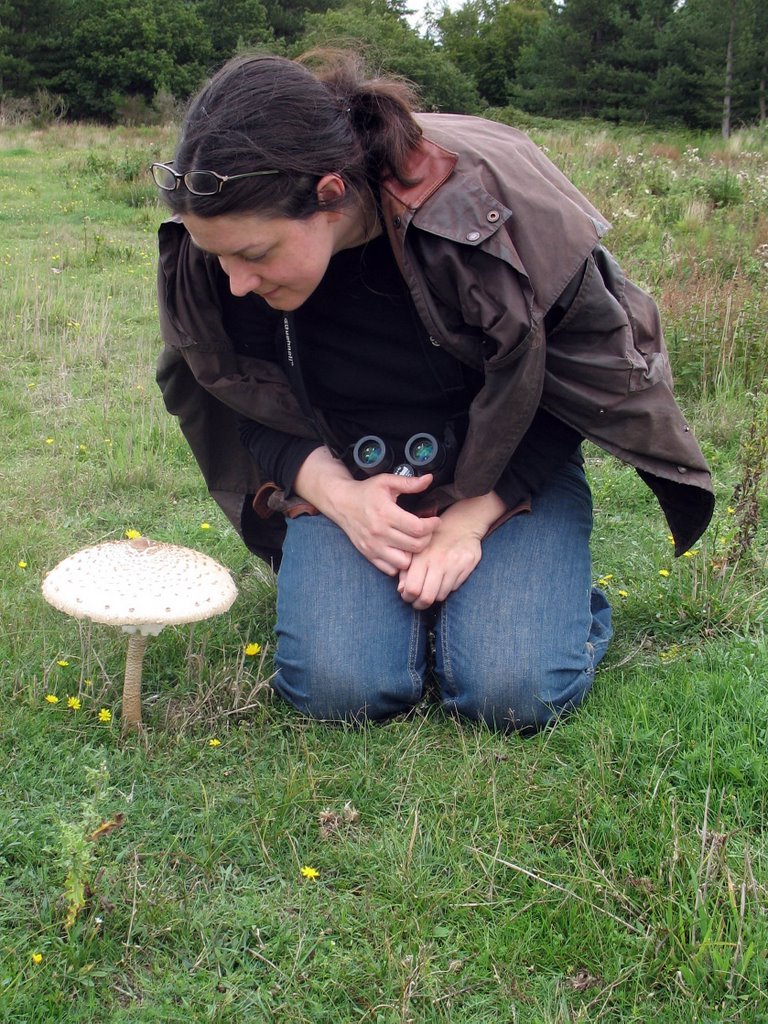
The last thing I'd looked up at for such a long space of time was the Milky Way. And I realised that the pattern of black rooks against the sky looked oddly like one of those negative images of stars astronomers use to examine areas of deep sky.  How strange it was to see rooks as stars. Little black stars, shifting through constantly reforming constellations. It was a little unpleasant, I admit. These rooks, normally the most rambunctious, courteous and comforting elements in a landscape, seemed as stately and remote as the passage of stars.

But then I saw, of course, that these moving constellations were simply relations between rooks. They were little groups of friends and families keeping close together on their way along the familiar route of rooks, as they did every night. The parties shifted in relation to one another; there were stragglers, and the flickers in magnitude were rooks playing diving games in the sky. The Road of Birds Indeed. I felt much, much better. What is it about birds flying home? I think it is the most reassuring thing I know.

Hark at the artiste. I've just been lonely, of late, I guess. The rooks made me feel better. Xtin has just made jam with the blackberries. It's a little over-boiled, but it's bloody delicious. Huzzah for autumn. Here's to less navel-gazy posts in future, and I raise a toast to all those birds on their way south.

Thursday, September 07, 2006

A moment away from my desk

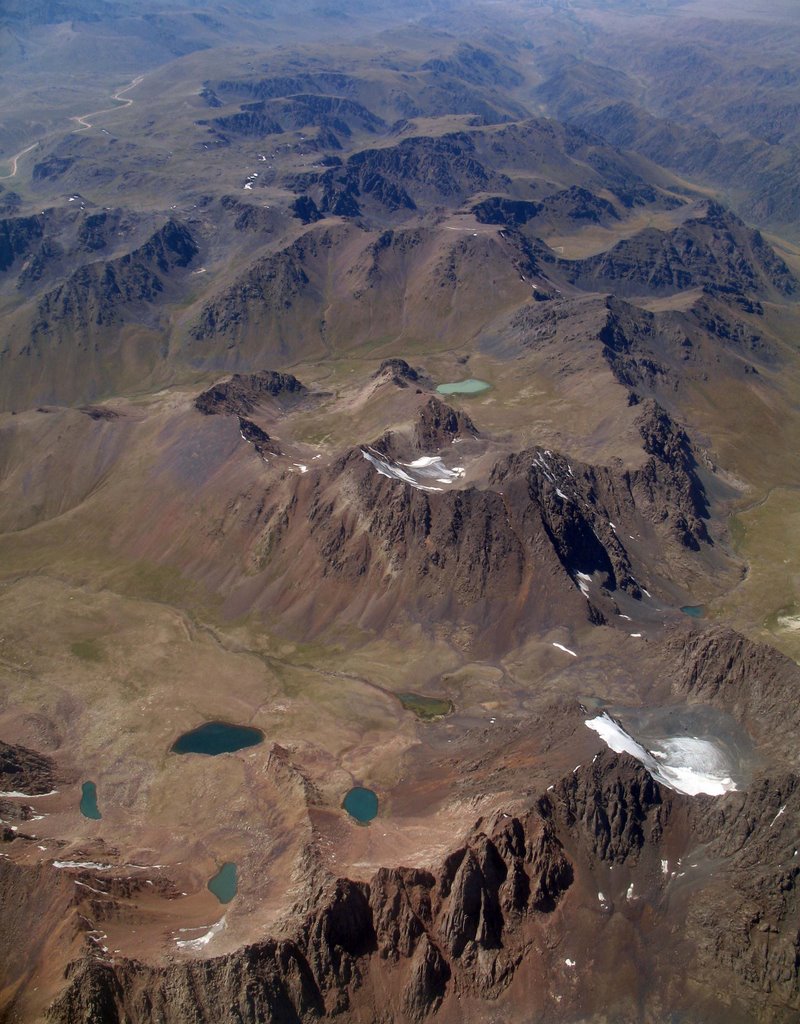
I can't bear that miserable bloody Edvard Munch picture for another moment. Not one. So I'm joining the Querencia club — that select club of bloggers pictured crouching next to edible fungi.

Pluvialis with a rather small example of a parasol mushroom.
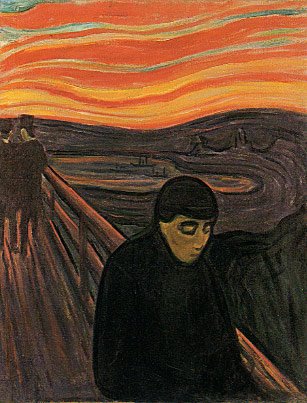

Yes, I've been out fungus hunting with Professor X. Which means: term is coming; autumn is near! Our haul included edible lactarius, pine ceps, chanterelles, wood mushrooms and a vast number of other spp. whose scientific names faded disgracefully upon hearing.

More pictures on flickr. Alas, none show the hundreds upon hundreds of hawker dragonflies; nor do they supply the peculiar aural background of heat-crackling pinecones and F-15 engines.

Mind you, no ticks in the pictures either. I escaped this time. I hate ticks.

Monday, September 04, 2006

Commentary

Another of my brave and ignorant attempts to get the old Haloscan comment system working has failed.
Are you still having problems with commenting? I don't understand why it worked and then didn't. And why some people can still sign in with their blogger identities, and some can't.

Suggestions? They don't have to be technical: they can be practical advice on revenge strategies, and so on...

Sunday, September 03, 2006

Open the pod bay door, HAL

Matt has just emailed to tell me that posted comments aren't showing up.

Why, O why did I not, in my jetlagged delirium, realise that "beta" blogger is indeed beta, and buggy as hell?

Try posting anonymous comments, rather than logging in with your blogger address — this may work. But tell me who you are.

Ah, this is no fun at all.

Yours, with a big sigh, and crossed fingers,
Pluvialis x

So there was this time, in Bishkek

We're all sitting around a long, wooden table. Evening sunshine. There are bowls of golden sultanas, fat apples, fresh walnuts, scones, black grapes, green grapes, pomegranates, bowls of home-cooked raspberry conserve and marmalade — the whole spread so perfectly like some imagined late-summer cornucopia, even down to one wasp balancing delicately on the lip of each glass bowl to munch on jam with its scissory mandibles, yum, that I'm almost singing with happy happy harvesty bonhomie.

And then — our hostess put a little bowl down in front of each of us. Inside was a block of white matter. About the size of the palm of my hand. Clearly some form of dairy product. And with this, my stomach gave a little pang. I've never been good at dairy goods. Blame the enforced milk-drinking at school. Oh, I hated that. But worse, I'd been sick — oh so sick — for the past few days, and the last thing I need, I thought, in my rising panic, is something like this.

Whatever it is. I ran through the list of Central Asian dairy goods in my head, trying to work out what it was. Fermented mare's milk? No, this was solid. Maybe there's a solid version? It wasn't those tiny, hard balls of sharp cheese that I ate in Tashkent? No. Oh lord, what a nightmare.

And I felt my brow starting to sweat, and my stomach rebelling against this white stuff's imagined taste, and I watched our host pour milk all over hers, and that befuddled me even more — ??! — and then I took a deep breath, swallowed back my nausea, and told myself not to be stupid. Whatever happens, you have to eat this. Just eat it.

It was the best ice cream I've ever tasted, of course.

Photoshop!

So I finally sorted out the contrast and colour balance in my mountain photos. Cool! Click for a bigger version...

Small Island

The most surprising thing has happened. An unexpected feature of being back in Britain after a few weeks in Central Asia. All I want to write about is here, not there.

After seven hours in a pressurised cylinder at thirty thousand feet, the long airport corridors, transit routes and carpeted, strip-lit tubes taking you from airside to landside function like passenger decompression chambers. They coax you back into ever-larger mental and physical spaces, each less and less like an aircraft cabin, until suddenly you find yourself outside the Arrivals hall smelling wet concrete, tarmac and avgas and feeling a mild flutter of post-flight agoraphobia occasioned by being at sea level under an open sky. Without those decompression corridors, you'd probably faint. Ha!

So I walked out into a perspex corridor after a seven hour flight, and stopped dead, because a big perspex window gave out onto the ramp, and Heathrow was busy and grey, and the sky was full of clouds. I'd not seen a cloud for over a fortnight. I'd forgotten that clouds were local things. Local like shipping lanes; local like icebergs.

These were massive cumulus congestus on their way to becoming stormclouds. From the bright summit of one blew long swathes and falls of ice.

The near-religious ecstasy of looking these clouds! I stood there for a very long time feeling exceedingly happy. Part of my joy at seeing these things might have been due to a system flooded with adrenalin. I'd just had the worst landing I've ever experienced ("was that a hard landing, or were we shot down?") but there was more to it than a bit of chemical exhilaration. And more, I think, than some dubious little-Englander nativism.

Because I realised something about this country, looking at the clouds. After weeks of the heavy, flat light of a double-landlocked country thousands of miles from the sea, I saw that British light — its serious greys and its soft pinks and blues and mild gunmetals that mimic pigeon plumage, and the particular way the sun cuts through these kinds of light, and the patterns clouds and sun make on trees and cities and water: all these things work as they do because we are so close to the sea. The light is maritime. I'd never before realised that the whole country sits under a sky mirrored and uplit by the sea.

Huzzah.

Saturday, September 02, 2006

Acorny

Posts soon, I promise. Busy times. As you can see


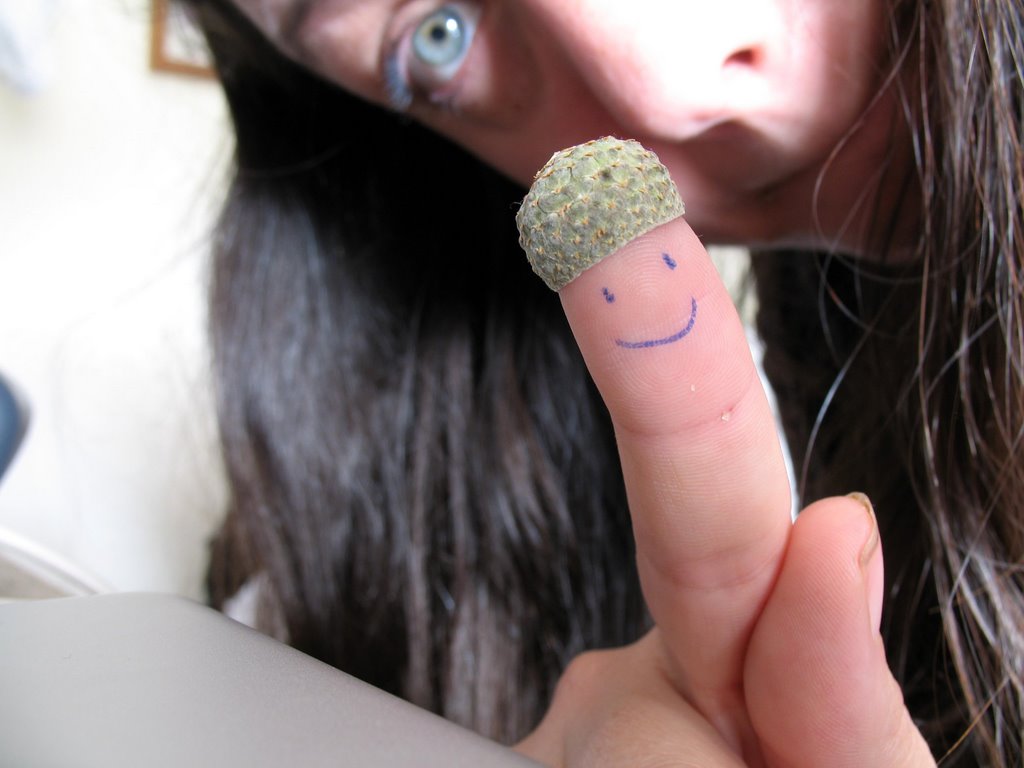
Drawing a smiley face on my finger and giving it an acorn hat really made my day. Worrisome.